
There’s a running joke in our office that the best indicator of which brands are winning on quick commerce is the state of the co-founder’s phone at 11pm. Open Zepto. Search your category. Is your brand on the first screen? Or are you watching your competitors get the order?
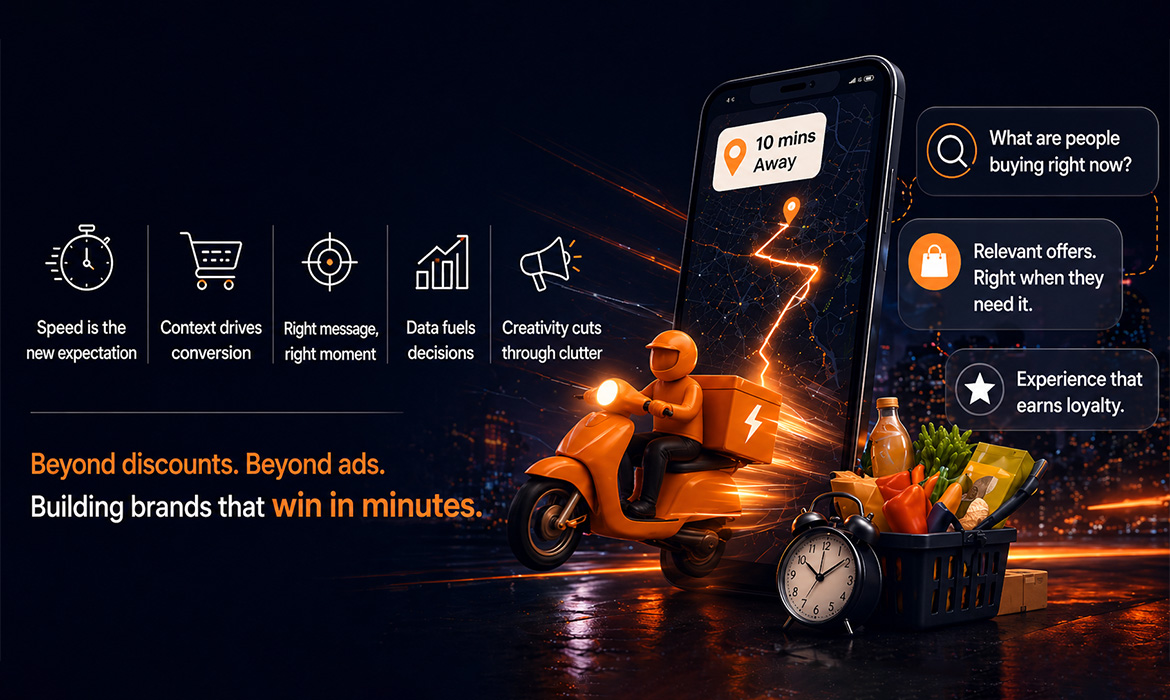
Quick commerce crossed ₹35,000 crore in 2025 and isn’t slowing down. But here’s what most brands still don’t understand: Blinkit, Zepto, and Swiggy Instamart aren’t just fulfillment channels. They’re advertising platforms with purchase-intent targeting that Google and Meta genuinely can’t replicate.
When someone opens Zepto at midnight and searches ‘protein bar,’ they’re not browsing. They’re buying. The intent gap between that moment and a Facebook ad served to someone half-watching cricket is enormous.
Why Most Brand Teams Are Getting This Wrong
We talk to brand managers regularly who treat quick commerce as a logistics problem — ‘we just need to stay in stock.’ That framing misses the entire marketing opportunity. Your listing on Blinkit is your new storefront. Your product imagery is your new packaging. Your search ranking on Zepto is your new shelf position.
And unlike a physical shelf at a kirana store, your quick commerce presence is fully optimisable, measurable, and improvable — in real time.
What Actually Moves the Needle
The listing is everything — and most listings are terrible
We’ve audited hundreds of quick commerce listings. The majority have product titles that nobody searches for, images photographed against a cluttered kitchen counter, and descriptions that read like they were written by the factory QC team. This is fixable — and the returns on fixing it are immediate.
Use the platform’s own search bar to discover what customers are actually typing. Lead your title with the key benefit, not the brand name. Invest in clean, lifestyle-forward imagery — it’s the difference between a 2% and 8% click-through rate.
Sponsored listings aren’t optional anymore
All three major platforms now have sophisticated in-app advertising. Sponsored placements appear exactly where search intent is highest. The targeting options — category, competitor keywords, time of day, delivery zone — are precise enough to make even small budgets work hard.
A common mistake: brands set up sponsored listings and leave them running on autopilot. The platforms reward active optimisation. Review your keyword bids weekly, pause what isn’t working, and reinvest in what is.
Sampling is the most underused strategy on these platforms
You can offer your product as a free or discounted addition to a customer’s cart during checkout — essentially digital sampling at massive scale. Brands that do this systematically build remarketing audiences of real, engaged trialists who convert at 4–5x the rate of cold audiences. Most brands have never even looked at this option in the platform’s ad console.
Drive external traffic to your listings
Don’t wait for organic discovery. Add ‘available on Blinkit / Zepto’ CTAs to your Instagram stories, your email footer, your packaging. Run a Meta ad that points directly to your quick commerce listing page. The algorithm on these platforms rewards listing velocity — the more orders a product gets, the higher it ranks.
This Isn't Just for FMCG Anymore
Quick commerce started with groceries and personal care. That era is over. Pet supplies, stationery, electronics accessories, OTC medicines, phone chargers, baby care — the categories are expanding every month. If your product can physically fit into a delivery bag and someone might want it within the hour, there’s a quick commerce play for you.

