
We had a conversation last year with a performance marketing manager at a D2C brand in Mumbai. Her entire retargeting strategy was built on third-party pixel data pooled from publisher networks. When we mentioned the DPDP Act she said, and we’re quoting almost exactly: ‘That’s a legal problem. We’ll deal with it when our legal team tells us to.’
Six months later, their retargeting campaign performance had dropped 34%. They were blaming ‘platform changes.’ But the root cause was data — specifically, the reliable, unrestricted data that their whole campaign architecture depended on was quietly drying up.
The DPDP Act isn’t just a compliance problem. It’s a marketing problem. And the brands treating it as purely a legal matter are going to feel it commercially before they ever see a regulatory notice.
What the DPDP Act Actually Requires (in Plain Language)
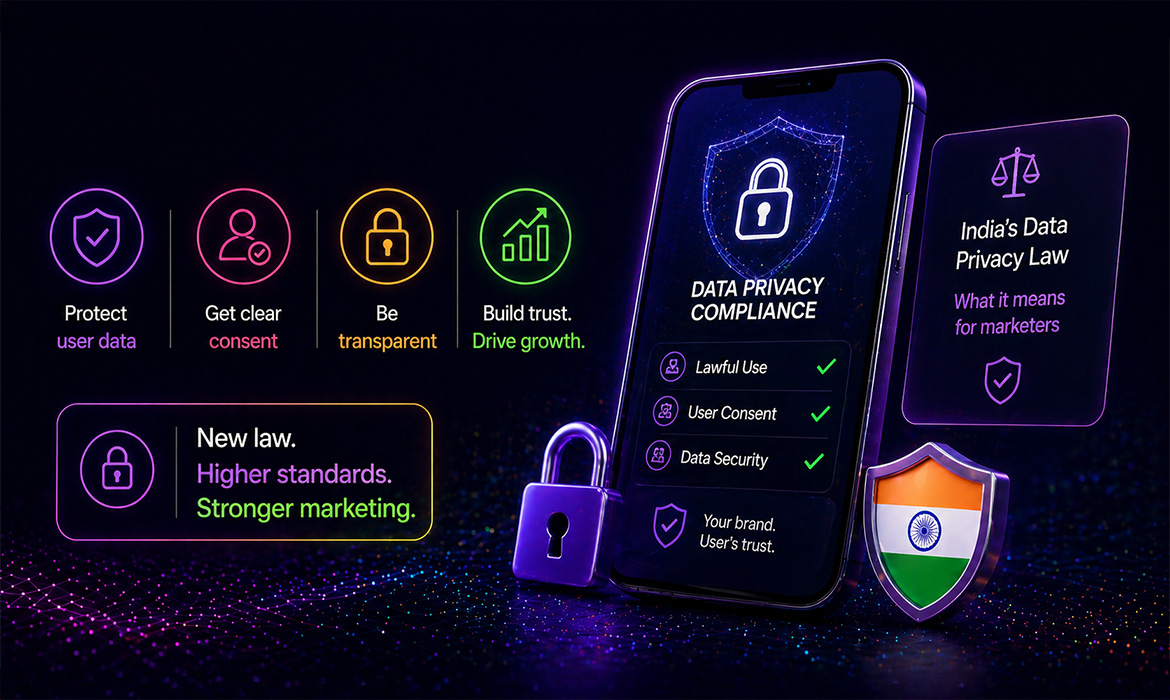
The Digital Personal Data Protection Act requires that Indian brands obtain clear, informed, specific consent before collecting personal data — and use that data only for the purpose it was collected for. The consent has to be genuine: not buried in a terms-of-service document, not pre-ticked, not implied by the act of visiting a website.
In practical marketing terms this means:
- Your cookie banner must actually work — not just appear, but give users real control
- Your email and SMS marketing to purchased lists is now legally exposed without consent records
- Your analytics setup that collects user data without consent is in violation
- Meta and Google’s cross-platform data sharing for ad targeting is constrained by new consent requirements
- You need to be able to produce consent records if challenged — ‘we had a pop-up’ is not sufficient
The Real Story — Third-Party Data Was Already Dying
Here’s the thing: the DPDP Act is accelerating rather than starting: the era of cheap, reliable third-party data was already ending. Google has been deprecating cookies for years. iOS has been eating at Meta’s targeting data since 2021. The brands that built their marketing infrastructure on the assumption that they’d always have access to rich third-party user data were building on sand regardless of Indian privacy law.
The DPDP Act is forcing a conversation that was always going to happen — just sooner, and with legal teeth.
What First-Party Data Strategy Actually Means
Stop renting audiences, start owning them
Your email list, your WhatsApp broadcast subscribers, your app push notification opt-ins — these are yours. They’re consented, they’re accurate, and no platform update or regulatory change can take them from you. Indian brands that have invested in building owned audiences are consistently outperforming those running purely on paid platform data.
The value exchange has to be genuine
People will share their data with you. But they need to know what they’re getting in return. Free audits, useful guides, exclusive early access, WhatsApp-only offers — these are the real currency of first-party data collection. A generic ‘subscribe to our newsletter’ with no clear benefit is not going to move the needle.
Build consent into your infrastructure, not as an afterthought
Your website needs a proper Consent Management Platform — a cookie system that actually works, documents consent decisions, and makes it easy for users to withdraw. This is now a legal requirement, and it’s also better marketing infrastructure. Brands with documented consent records have more trustworthy data, which produces better campaign results.
The marketers who will define the next decade of Indian brand growth are not the ones who extract the most data. They’re the ones who earn the most trust — and that trust, when it turns into a consented email address or a WhatsApp opt-in, is worth ten times what a third-party data point ever was. |

