
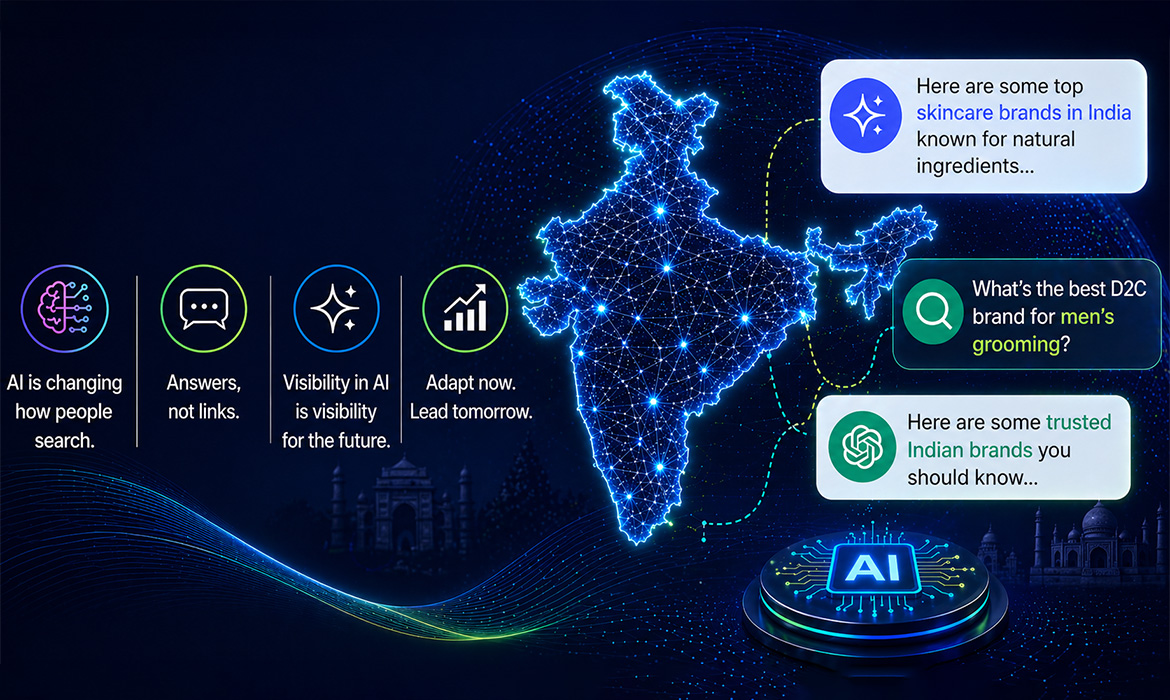
Last month, one of our clients — a chartered accountant in Bandra — asked us something that stopped us mid-conversation. He said: ‘My nephew told me he found his last CA by asking ChatGPT. Am I on ChatGPT?’
We checked. He wasn’t. And that’s a problem that’s going to get a lot more expensive before it gets better.
In 2026, a growing chunk of how people find service providers, compare options, and make decisions happens inside AI tools — not search engines. And the discipline that determines whether your brand shows up there is called Generative Engine Optimisation, or GEO.
It’s brand new. Most agencies haven’t figured it out. And that’s exactly why right now is the best time to get ahead of it.
Okay, But What Actually Is GEO?
GEO is the practice of making your brand visible inside AI-generated answers. When someone asks ChatGPT ‘what’s the best performance marketing agency in Mumbai?’ — GEO is what determines whether your name comes up, or someone else’s does.
Unlike traditional SEO, you’re not chasing a page ranking. You’re chasing a mention inside an answer. These tools synthesise information from across the internet and produce a confident, single response. If your brand isn’t embedded in the sources those tools trust — you’re invisible.
Why This Is Particularly Urgent for Indian Brands
India is now the largest market for ChatGPT usage in Asia. Gemini is growing fast on Android. Perplexity’s Indian user base more than tripled last year. And crucially — it’s not just tech-savvy users. Regular small business owners, housewives researching schools, patients looking for doctors — everyone’s starting to use AI to find answers.
The shift is happening faster here than anywhere else, partly because voice search and AI assistants leapfrog the ‘type keywords into a box’ behaviour that older Indian internet users never fully adopted anyway. Why type when you can ask?
Six Things That Actually Improve Your GEO Visibility
Get mentioned in places AI tools actually trust
These tools don’t pull from everywhere — they pull from sources they consider credible. Industry publications, review platforms like Clutch or Justdial, and news mentions all count. A press feature in an Indian marketing publication is worth ten backlinks right now.
Write content that answers specific questions definitively
AI tools love content that is structured, confident, and specific. A blog post that answers ‘what should I look for in a digital marketing agency in Mumbai’ — with a clear, detailed answer — is far more likely to get cited than a generic ‘we are a full-service agency’ page.
Be consistent about who you are across the internet
Your brand name, address, phone number, and service descriptions should say the same thing everywhere — Google Business Profile, LinkedIn, Clutch, your website, press mentions. Inconsistency confuses AI knowledge graphs and reduces citation likelihood.
Build structured data on your website
LocalBusiness schema, FAQPage schema, and Article schema help AI crawlers understand your content at a technical level. It’s a small technical investment with outsized GEO returns.
Earn your E-E-A-T signals
Experience, Expertise, Authoritativeness, Trustworthiness. These aren’t just SEO buzzwords anymore — they’re what AI tools use to decide if they trust a source enough to recommend it. Author bios, real case studies, dated client results, named team members: all of these help.
Check where you stand and fix the gaps
Open ChatGPT right now and search your brand name. Then search your service + your city. Then search the question your ideal client would ask. Whatever you find — that’s your starting point. Most brands who do this exercise are genuinely surprised by how absent they are.
GEO isn’t replacing traditional SEO. The brands doing best in AI search right now are ones with strong SEO foundations who’ve simply extended their strategy to cover the new terrain. The window to get in early is still open — but not for long.

